
Performance and the Social Mask
The Black-Eyed BlondeThis flow follows the novel’s recurring performances, showing how people use charm, roles, and appearances to manage danger and hide the selves beneath them.
increasing Bearing strength in each event
 decreasing
Bearing strength in each eventdecreasingThe Veiled Client
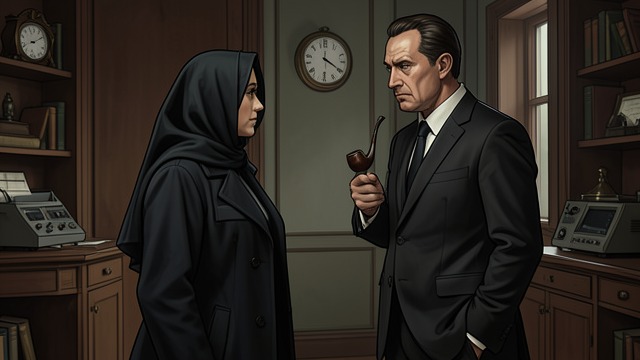
An Entrance Behind a Veil
Deliberate Appearance
Clare Cavendish arrives in Philip Marlowe’s office wearing a veil, polished clothes, and the manners of a wealthy client who can control the pace of an interview. She presents a simple request to find Nico Peterson while withholding that she already knows he is presumed dead.
The Detective’s Counterperformance
Marlowe responds with practiced noir wit, a detective’s measured questions, and a pipe used as a prop for thought. Their meeting begins as an exchange of roles: the client performs composure and the investigator performs skepticism, while both test how much the other can see.
The Lost Necklace

A Cover Story in Company
An Improvised Explanation
When Richard Cavendish arrives, Clare quickly recasts Marlowe as someone hired to find a missing pearl necklace. The story gives her husband a socially acceptable explanation for the detective’s presence and shields the actual inquiry from a man whose reactions she cannot predict.
Performance as Protection
Marlowe joins the performance rather than expose her in front of Richard. The exchange shows that deception in this world is not always a bid for profit: sometimes it is a way to keep private knowledge from a hostile audience. Yet every false explanation adds another layer between the people involved and the truth.
The Studio Persona
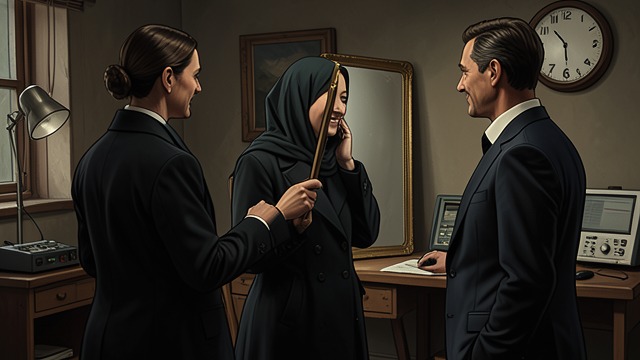
A Starlet at Work
A Practiced Image
At Excelsior Studios, Mandy Rogers answers Marlowe’s questions through the gestures and poses of an aspiring screen actress. Her smiles, lip-biting, and shifts in tone suggest that acting has become an everyday method of presenting herself, not merely a skill reserved for the camera.
The Person Beneath the Pose
When Marlowe asks where she comes from, Mandy briefly stops performing and speaks uncertainly about Hope Springs, Iowa. That small break in the act reveals the vulnerability behind her Hollywood ambitions. The encounter links public image to a deeper need: a person can shape a persona to survive a world that continually judges and consumes appearances.
The Gentleman Act
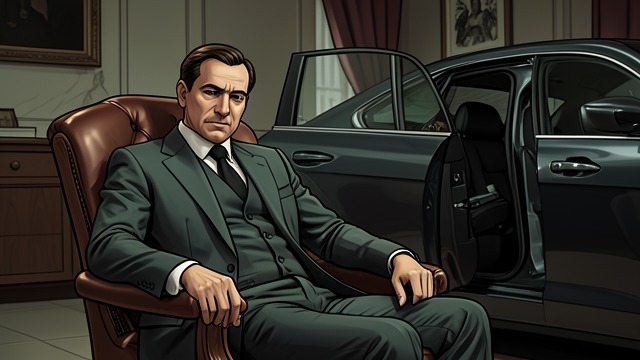
Charm in the Back Seat
A Criminal’s Costume
Lou Hendricks surrounds his threats with an imitation British accent, courteous turns of phrase, and the polished comfort of an expensive car. The performance makes coercion appear civilized, even as he attempts to extract information and buy Marlowe’s services.
The Mask Slips
When Marlowe refuses the money, Hendricks drops into a plainer, more openly threatening manner before recovering his genial tone. His shifting voice exposes the purpose of the gentlemanly façade: it softens the visible edges of power without changing what that power can do. The performance is effective precisely because it makes intimidation feel like conversation.
The Final Disguise
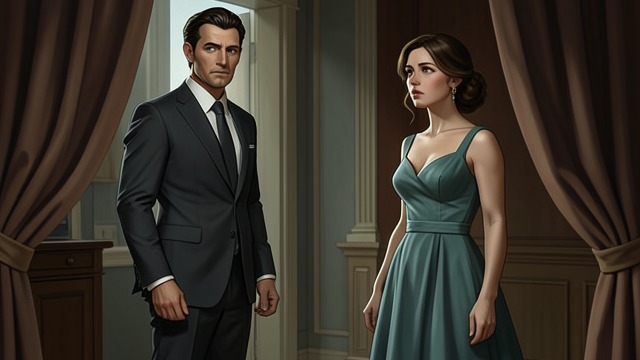
A Friend Behind the Curtain
Recognition Through Concealment
Marlowe recognizes that Clare’s story has concealed another man, and calls Terry Lennox out from behind the drapes. Terry appears in a refined suit with the familiar rueful charm of their friendship, although the face and identity Marlowe once knew have already been remade through surgery and flight.
Style Without Integrity
Terry’s urbane manner initially makes the reunion feel like a return to old intimacy. But his role as a charming friend cannot hide his use of Clare and Nico in a heroin scheme. His performance survives even after the moral substance beneath it has deteriorated, leaving Marlowe to separate the gentleman he remembers from the man standing before him.
On the first Tuesday afternoon
During Marlowe’s first visit to Langrishe Lodge
Midway through Marlowe’s early inquiries
During Marlowe’s first drive with Lou Hendricks
On the last night at Langrishe Lodge
